The Grand Vision: The Quest for the Universal Hunting Dog
Every great dog breed has a foundational story, but the German Wirehaired Pointer (GWP), or Deutsch Drahthaar (DD), has an industrial-age mission statement etched into its very DNA. Imagine the European landscape in the late 19th century. As hunting practices evolved, the average sportsman wasn’t a land baron who could maintain a kennel full of specialized dogs—one for pointing, one for water retrieving, one for tracking. What they needed was a single, all-purpose, all-terrain, all-weather working dog.
This was the challenge taken up by determined German breeders. Their goal was audacious: to synthesize the best qualities of existing rough-haired pointing breeds into a single, cohesive, and genetically robust animal. They weren’t interested in specialization; they were after versatility—a dog that could perform equally well in the mountainous regions of the Alps, the dense forests, the open agricultural fields, and the cold, marshy wetlands.
The DD Philosophy: Performance Over Pedigree
The breeding movement that led to the GWP was a calculated rejection of the prevailing trends in dog breeding at the time. Across Europe, many registries were closing their studbooks, prioritizing appearance and pedigree above working ability. The GWP founders, led by the rigorous standards of the Verein Deutsch-Drahthaar (VDD), held a different, more practical view: form must follow function.
The true measure of a DD was not its looks in the show ring, but its successful completion of demanding utility tests. These standardized, rigorous evaluations—known as the VDD’s JGHV tests—cover every aspect of the hunting dog’s job. They include:
- Tracking and Locating: Finding and pointing upland game (pheasant, quail).
- Water Work: Entering cold water without hesitation and retrieving waterfowl (duck, goose).
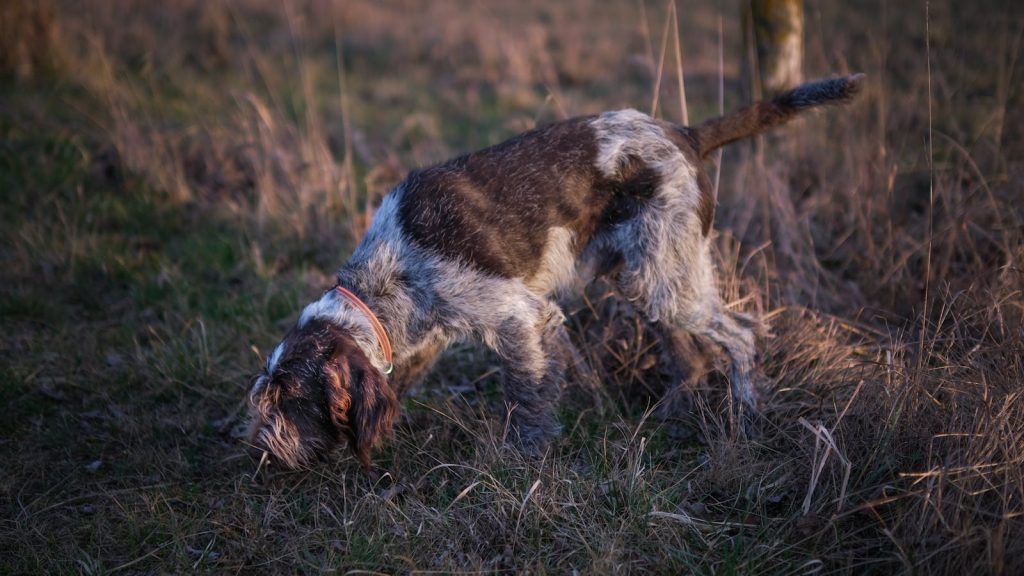
- Tracking Wounded Game: Following blood trails (or Schweiss) to recover tough quarry like deer, wild boar, or fox. This commitment to recovery is an ethical and mandatory component of German hunting culture.
- Obedience and Steadiness: Demonstrating control and calm under pressure.
If a dog wasn’t able to pass these demanding tests, it wasn’t bred, regardless of how handsome or well-pedigreed it was. This philosophy created a dog where toughness, intelligence, and working drive are genetically mandatory.
The Ingredients: A Masterful Genetic Blend
The creation of the GWP was less about happy chance and more about calculated genetic engineering. Breeders deliberately blended several foundational rough-haired European breeds to pull in the desired traits, solving the weaknesses of each predecessor:
- The Pudelpointer: This earlier cross (Poodle x Pointer) contributed heavily to the coat and water drive but lacked consistency.
- The Stichelhaar (German Rough-haired Pointer): Known for its harsh coat and determined tracking ability.
- The Griffon (Korthals Griffon): Provided the dense, wiry coat and excellent hunting instincts.
- The German Shorthaired Pointer (GSP): Infused speed, elegance, and high-quality pointing ability, though breeders had to work hard to maintain the dominant wire coat genes after these crosses.
The resulting GWP fixed the issues of its ancestors: it offered the weatherproof coat that its shorthaired cousin lacked, and it possessed the consistency and high-level training ability that plagued the Pudelpointer lines. The result was a dog that could work through thorn thickets one minute and lie quietly by the fire the next.
Survival and Scarcity: The Resilience of the DD
The history of the GWP is deeply interwoven with the turbulence of 20th-century Europe. During and immediately following World Wars I and II, many European dog breeds faced devastation. Resources for feeding dogs were scarce, and organized breeding programs collapsed.
Yet, the DD philosophy proved its worth. Because the focus had always been on the working ability and genetic health, dedicated breeders were able to ensure the best working lines survived. They were less concerned with minor deviations in appearance and more concerned with preserving the breed’s unmatched utility. The GWP’s tenacity and adaptability weren’t just traits for the field—they were essential for the breed’s very survival.
Post-WWII, strict import/export regulations and the Iron Curtain further complicated the breed’s development, leading to a slight divergence between the German-bred DD (which remains under the tight control of the VDD, requiring proof of working ability for breeding) and the American GWP (recognized by the AKC in 1959, often bred more for pet homes or conformation shows). While both share the same origin and core traits, the German lines maintain an intense focus on the mandatory utility testing.
The Modern Legacy: A Partner of Unwavering Trust
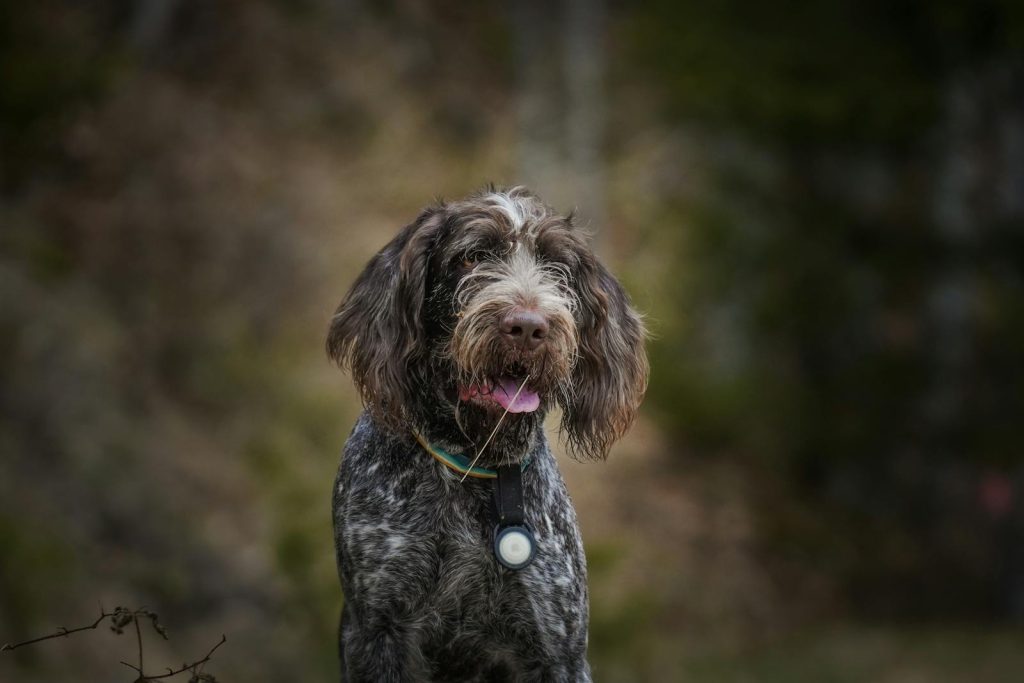
When you look at a GWP today, you aren’t just seeing a dog; you’re seeing the successful result of over a century of rigorous selection for toughness, intelligence, and loyalty. Every wiry hair, every strong webbed foot, and every intense, intelligent gaze speaks to the original mission.
This history explains why the GWP is often a difficult fit for a casual owner. They are hard-wired to be partners, not just pets. Understanding their epic, utility-driven past makes you appreciate the magnitude of the commitment you’re making to a dog that was truly bred to work alongside you through thick and thin. Their scruffy elegance is a badge of honor, symbolizing a lineage built on performance and resilience.